Torque converter
Couples engine power to the transmission and can lock at speed.
Automatic transmission specialists · Chicago
Modern automatic transmissions combine hydraulic pressure, precision mechanical parts and computer controls. When shifting changes, guessing becomes expensive. Our Chicago transmission team evaluates the complete system and explains whether the vehicle needs service, an external repair, internal work, rebuilding or replacement.
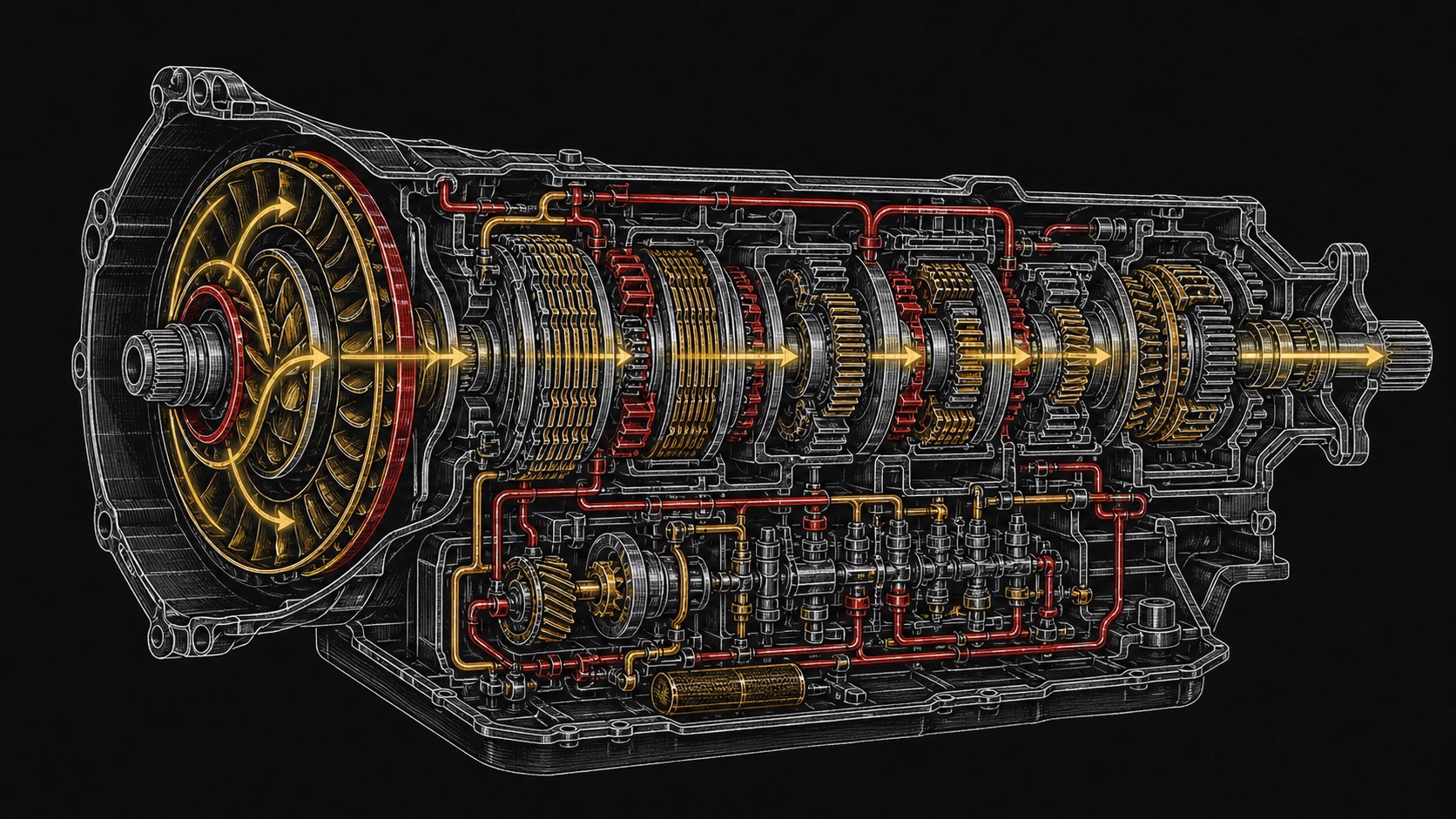
Power enters here before pressure and gear changes route it onward.
Couples engine power to the transmission and can lock at speed.
Lubricates components and creates working hydraulic pressure.
Routes pressure through valves and electronically controlled solenoids.
Select ratios and transfer torque to the drive wheels.
Smooth shifting depends on pressure, control and mechanical holding elements working at the correct moment.
One symptom can have several causes. These signs tell us where to begin—not which part to replace.
Symptoms, scan data and a controlled road test show when and how the shifting problem occurs.
We examine fluid condition, leaks, wiring, codes and operating data before assuming internal failure.
The diagnosis helps identify whether the cause is serviceable outside the unit or requires transmission removal.
We discuss the repair path, estimate and applicable warranty before approved work begins.
The strongest information from our original service guides, reorganized into short visual chapters.
An automatic transmission uses a torque converter, hydraulic pump, valve body, clutch assemblies, gearsets, seals, sensors and a control module to transfer engine power. A problem in any one area can change how the vehicle engages or shifts. Engine misfires, worn mounts and axle problems can also feel like transmission trouble.
Reading a trouble code is only the beginning. The code must be compared with fluid condition, live operating data and the symptom the driver experiences. This reduces the risk of replacing parts based on a code alone.
Depending on the findings, service may involve the correct fluid and filter, leak repair, cooler-line work, electrical diagnosis, a solenoid or valve-body repair, torque-converter work or internal transmission repair. When internal wear is widespread, rebuilding or replacement may offer a more dependable result than an isolated repair.
Different transmissions require different fluids, fill procedures and adaptation or calibration steps. Bring the vehicle information and any recent repair history so the team can identify the unit and service requirements accurately.
Our shop at 6144 W Irving Park Road serves Chicago and nearby communities. Customers can speak with the team in English or Spanish, request towing assistance and receive an explanation of the recommended work before authorizing a repair.
Call (773) 286-4761 with the year, make and model, current mileage and the exact shifting behavior. Details such as whether the issue happens cold, hot, uphill or after highway driving can help the diagnostic process.
Possible causes include incorrect or low fluid, pressure loss, solenoid or valve-body problems, sensor data, control programming, worn mounts or internal clutch damage. Testing determines which applies to the vehicle.
The correct interval and procedure depend on the manufacturer, transmission design, fluid condition and service history. We can inspect the vehicle and discuss the appropriate maintenance rather than applying one interval to every car.
A torque-converter clutch problem can feel like driving over a rumble strip during light acceleration. Similar vibrations can come from the engine, tires or driveline, so the symptom should be verified before repair.
Yes. We work with multiple drivetrain layouts. AWD vehicles may also require checking transfer components and differentials because their symptoms can overlap with transmission concerns.



Towing available