Pedal & hydraulics
Master cylinder, fluid, lines and hoses carry pressure.
Brake inspection & repair · Chicago
Your brakes communicate through sound, pedal feel and the way the vehicle behaves while stopping. We use those clues, plus a direct inspection, to identify whether the concern is in the friction parts, hydraulics, hardware or electronic controls before recommending work.
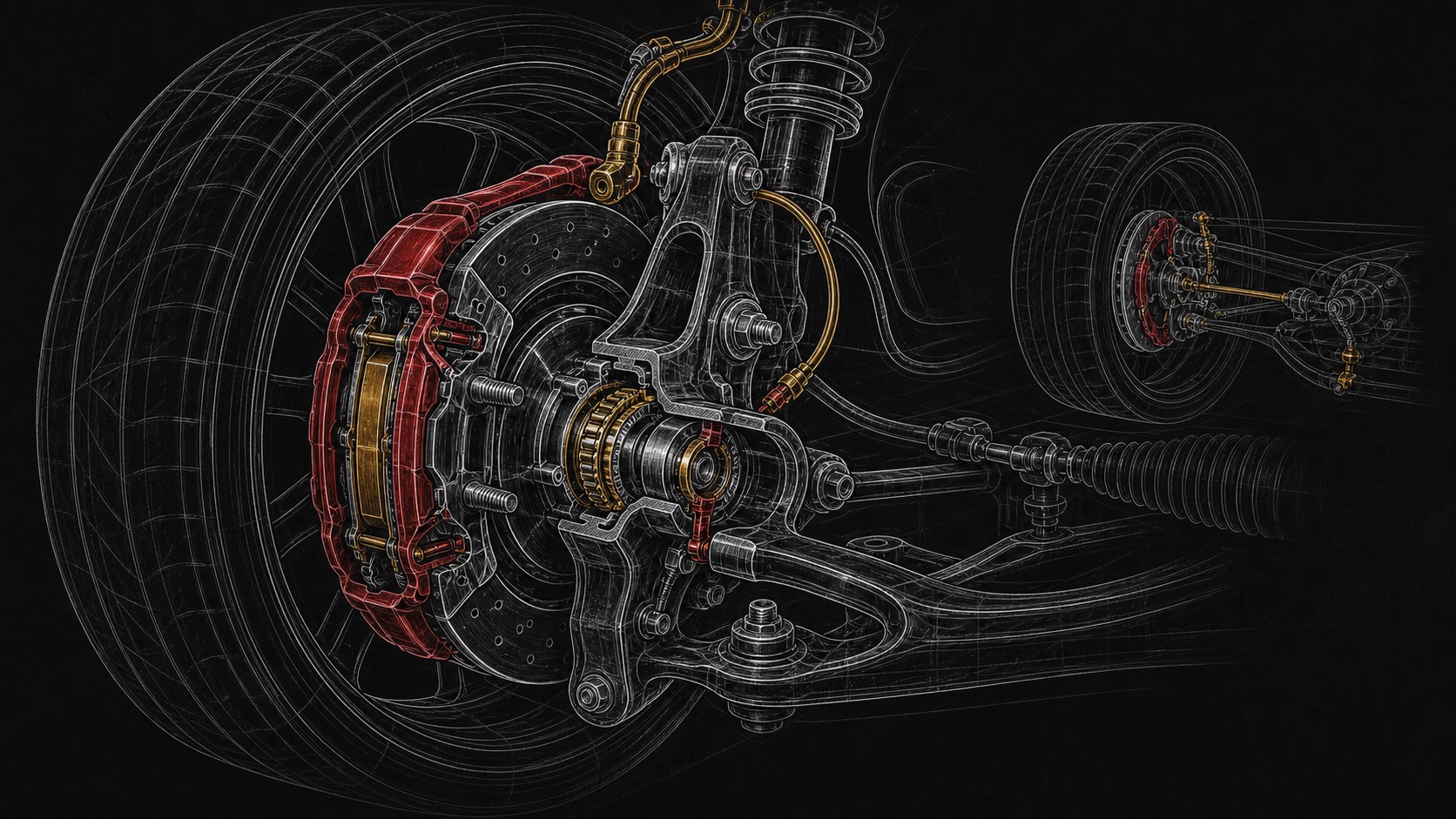
Hydraulic force becomes controlled friction at each wheel.
Master cylinder, fluid, lines and hoses carry pressure.
Apply and release pads evenly at the wheel.
Provide the friction surface and absorb braking heat.
Monitor wheel speed and manage lockup when needed.
The pedal begins a chain that must deliver even hydraulic pressure and controlled friction at the wheels.
One symptom can have several causes. These signs tell us where to begin—not which part to replace.
We note the sound, pedal feel, vibration and conditions under which the symptom occurs.
Pads, rotors or drums, calipers, hoses, lines, fluid and visible hardware are checked together.
Wear, runout and component condition help determine what can remain in service and what needs attention.
After approved work, pedal feel and stopping behavior are checked before the vehicle is returned.
The strongest information from our original service guides, reorganized into short visual chapters.
The older site asked drivers to pay attention to what they hear, see and feel. A squeal can indicate a wear indicator or surface condition; grinding can mean the friction material is worn through; pulsation may point to rotor or drum variation; and pulling can come from uneven braking, tires or suspension. Each symptom needs inspection rather than a one-part guess.
Brake concerns usually become more expensive—and less safe—when ignored. If the pedal suddenly drops, a warning light appears with poor braking, or the vehicle no longer stops normally, do not keep driving it. Call the shop and ask whether towing is the safer option.
Brake pads press against rotors, while some vehicles use shoes and drums. Calipers or wheel cylinders apply the force, and the master cylinder converts pedal movement into hydraulic pressure. Hoses, steel lines, fluid, hardware and ABS controls all affect how that force reaches the wheels.
Our brake service may include pads, rotor or drum service, caliper inspection, hydraulic leak repair, line and hose inspection, fluid evaluation and ABS diagnosis. The estimate is based on the parts actually affected and the condition of the system.
Quality Transmission & Auto Service works on brakes for many foreign and domestic cars, SUVs, vans and light trucks. The shop is at 6144 W Irving Park Road and serves Portage Park, Old Irving Park, Dunning, Norridge, Harwood Heights and nearby Northwest Side communities.
Call with the year, make and model and describe exactly when the noise or vibration happens. Se habla español, and towing coordination is available when the vehicle cannot be driven safely.
Not always. Wear indicators, glazed surfaces, hardware, moisture and debris can all create noise. Pad thickness and the complete brake assembly should be inspected.
Variation in the front rotors is a common cause, but loose suspension or steering parts and tire issues can create similar symptoms. Measurement and inspection separate them.
A soft or sinking pedal can indicate air, a leak or hydraulic failure. Because stopping ability may be reduced, stop driving and call the shop for guidance.
Brake parts are usually serviced in axle pairs, but the front and rear axles do not automatically need the same work. Their measured condition determines the recommendation.


Towing available