Viscosity & approval
Match the oil to temperature range and manufacturer spec.
Engine oil & preventive service · Chicago
An oil change is simple only when the oil is correct. Viscosity, manufacturer specification, capacity, filter and service interval all matter. We match the service to the vehicle and use the visit to look for developing maintenance concerns.
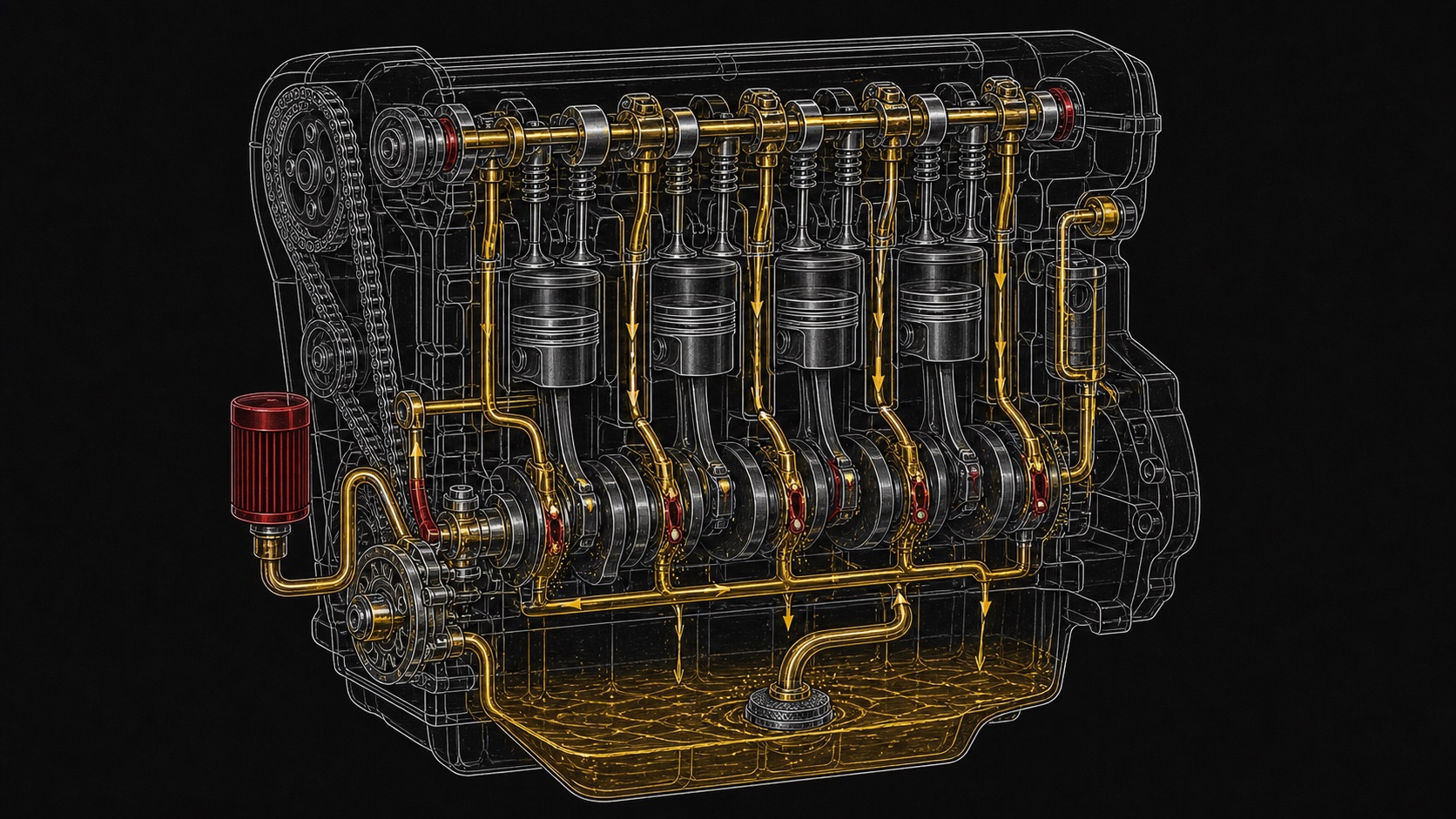
Oil circulates inside the engine, then returns to the pan below.
Match the oil to temperature range and manufacturer spec.
Trap contaminants while maintaining the required flow.
Confirm capacity and inspect the drain, filter and leak areas.
Review tires, accessible fluids, belts, lights and wipers.
The product, level and filter must match the engine, and the visit can reveal leaks or maintenance needs developing elsewhere.
One symptom can have several causes. These signs tell us where to begin—not which part to replace.
Year, engine, required viscosity, approvals and capacity determine the oil and filter.
The old oil, drain area, filter location and visible leak points are checked during service.
Oil is filled to the correct level, the filter and drain point are checked, and the reminder is reset when applicable.
Accessible fluids, tires, belts, lights and other key items are noted so you know what may need attention.
The strongest information from our original service guides, reorganized into short visual chapters.
Conventional oil may suit some older designs and normal use. High-mileage formulas are marketed for engines with more mileage and may include seal-conditioning additives. Synthetic blends combine conventional and synthetic base oils, while full synthetics are formulated for stronger performance across temperature and load conditions.
The category alone is not enough. Many modern engines require a specific viscosity and performance approval. We use the vehicle information and manufacturer guidance rather than assuming every car needs the same product or interval.
The previous site included oil and filter plus checks of coolant, engine air filtration, serpentine belts, brake fluid, wipers, exterior lights, tire pressures and accessible drivetrain fluids. We kept that useful checklist because an oil-change visit is a practical time to notice maintenance needs early.
Fluid condition or a low level can be a clue, but topping off does not repair a leak or worn component. If we see something that needs diagnosis, it is explained separately from the oil service.
Modern oil-life monitors consider operating conditions, while owner’s manuals may define normal and severe service. Frequent short trips, long idling, towing, extreme temperatures and dusty driving can change the appropriate interval.
If the red oil-pressure warning light comes on while driving, that is not a routine reminder. Shut the engine off as soon as it is safe and arrange inspection to reduce the risk of engine damage.
No, but many vehicles do require it or a specific manufacturer approval. The owner’s manual and engine specification determine the correct oil.
High-mileage products often include additive packages intended for older seals and engine conditions. They do not repair mechanical wear or an active leak.
Color alone is not a reliable interval. Follow the oil-life monitor or manufacturer schedule and consider how the vehicle is used.
No. A red oil-pressure warning can mean the engine is not receiving proper lubrication and should be treated as urgent.


Towing available