
Primary pulley
Changes effective diameter on the engine-input side.
Continuously variable transmission service · Chicago
A continuously variable transmission behaves differently from a traditional automatic, and it must be diagnosed with that design in mind. If your CVT shudders, whines, overheats, hesitates or holds unusually high RPM, Quality Transmission can inspect the fluid, controls and mechanical operation before recommending the next step.
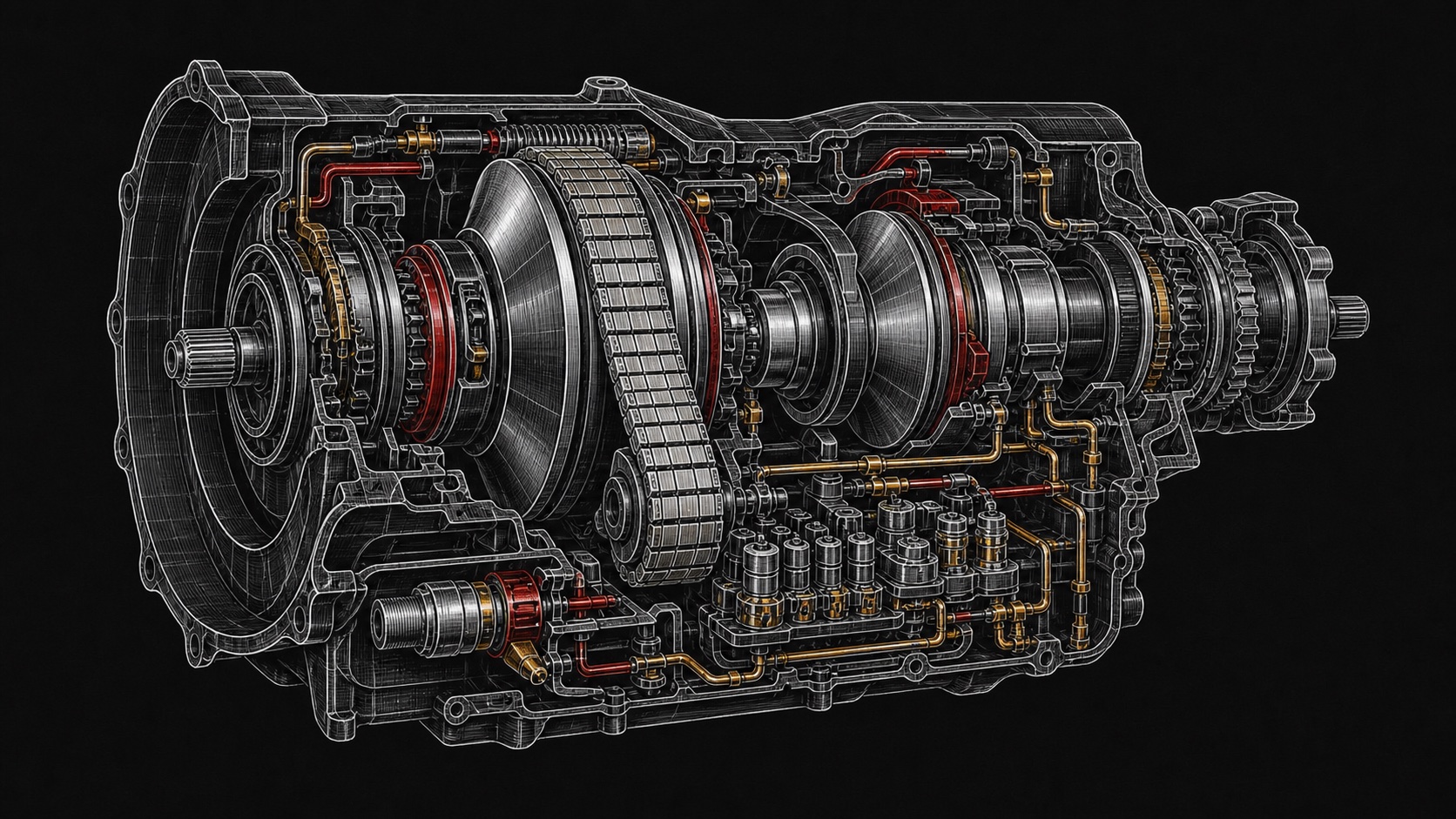
Pulley position and hydraulic control continuously change the ratio.
Changes effective diameter on the engine-input side.
Transfers force between the two variable pulleys.
Responds with the output ratio sent toward the wheels.
Provides pressure, lubrication and temperature control.
Many CVTs use two variable-diameter pulleys linked by a steel belt or chain. Fluid pressure and electronic commands constantly adjust their ratio.
One symptom can have several causes. These signs tell us where to begin—not which part to replace.
The exact unit, mileage, prior fluid service and operating symptoms shape the inspection plan.
Correct fluid level, condition, temperatures, codes and live data provide evidence about CVT operation.
Testing helps distinguish control, valve-body, bearing, belt or pulley concerns from other vehicle vibrations.
We explain whether maintenance, a focused repair or replacement evaluation makes sense for the condition found.
The strongest information from our original service guides, reorganized into short visual chapters.
Instead of selecting a small number of fixed gears, many CVTs vary the operating ratio through pulleys and a belt or chain. Other designs use different internal layouts, but all depend on the correct fluid, hydraulic pressure, temperature control and electronic commands. Their normal sound and engine speed can feel unfamiliar to drivers accustomed to conventional automatic shifts.
Because of those differences, a general description such as ‘it is slipping’ is not enough to choose a repair. We reproduce the symptom, review the control data and inspect the service condition before deciding whether the problem is maintenance-related, hydraulic, electronic or internal.
CVTs are common in Nissan, Honda, Toyota, Subaru, Mitsubishi, Lexus, Chrysler, Jeep and other vehicles. The fluid specification and service procedure are not interchangeable between them. Using a universal fluid or an incorrect fill method can change operation and may create additional problems.
Possible repair paths include the correct fluid service, leak repair, cooler or temperature diagnosis, electrical testing, valve-body work or evaluation of internal pulley, belt, chain and bearing damage. Parts availability and repair options vary by unit, so the vehicle identification number may be needed before an estimate is finalized.
The shop is located on West Irving Park Road and serves drivers across Chicago’s Northwest Side and nearby suburbs. Bring any maintenance records and explain when the symptom is strongest—cold start, stop-and-go traffic, highway speed or after the vehicle warms up.
If the vehicle is losing movement or showing an overheating warning, continued driving may increase damage. Call the shop to discuss whether towing is the safer option. Se habla español.
Some CVT problems can be serviced or repaired, while widespread internal damage may require replacement. The design, available parts and test results determine the options for a specific vehicle.
Drivers may notice whining, humming, grinding or changes in sound with speed. Wheel bearings, accessories and other driveline parts can sound similar, so the source should be confirmed.
Yes. CVT fluid affects friction, pressure and temperature control. The exact specification matters, and a fluid service cannot reverse existing mechanical damage.
The shop evaluates CVT-equipped vehicles from Nissan, Honda, Toyota, Subaru and other manufacturers. Call with the year, model and VIN so we can identify the transmission correctly.





Towing available