Air & fuel
Meter the correct mixture and deliver it consistently.
Engine diagnostics & repair · Chicago
A trouble code names a circuit or detected condition—not automatically the failed part. We combine scan data with mechanical, electrical and visual testing so a warning light, misfire, overheating problem or loss of power leads to a repair based on evidence.
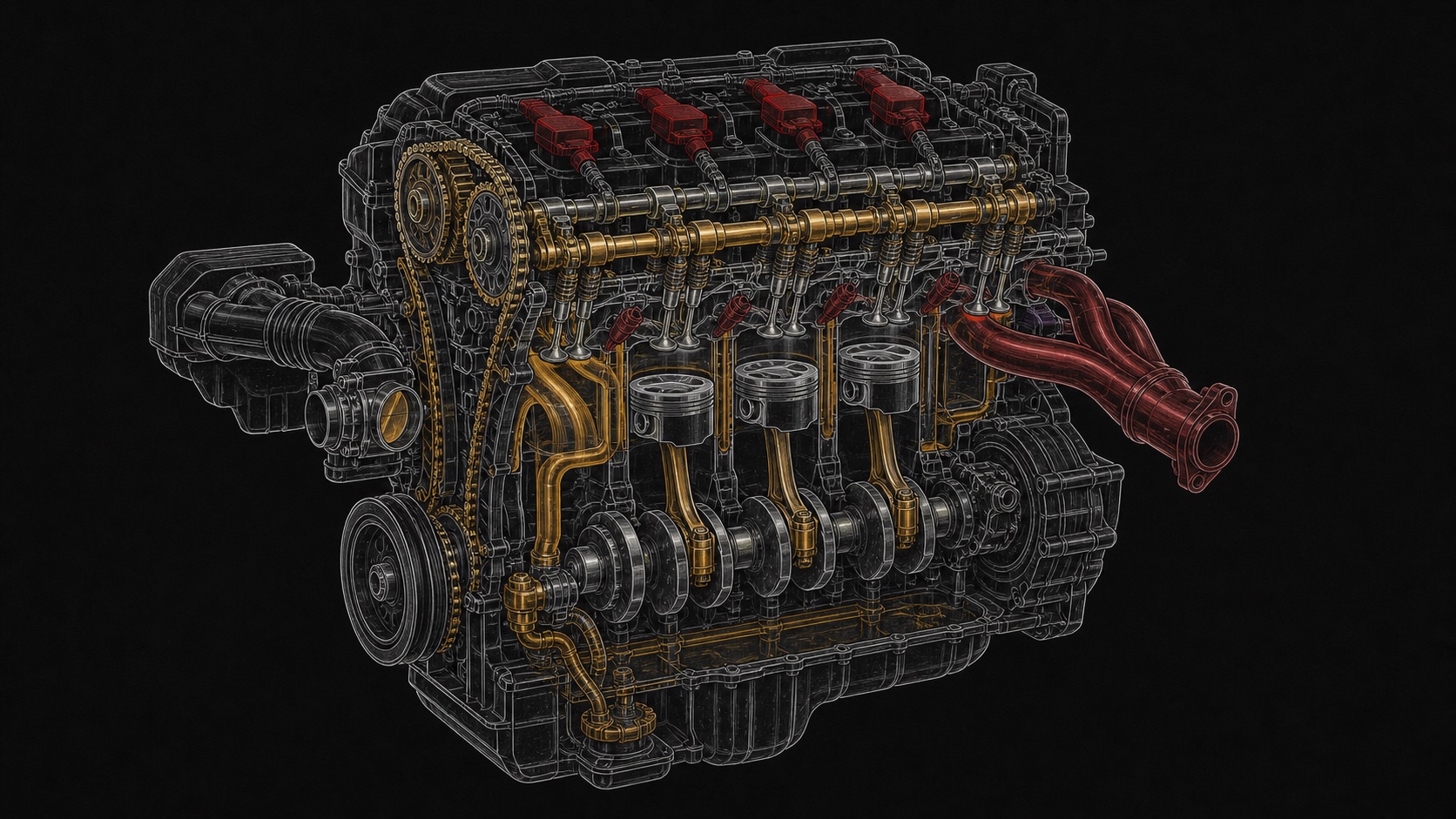
Air, fuel, spark, compression and temperature meet under the hood.
Meter the correct mixture and deliver it consistently.
Ignite the mixture at the correct point in the cycle.
Valves, rings and sealing create usable cylinder pressure.
Manage temperature, sensors, emissions and protection.
Computer data helps point the way, but the engine still depends on fundamental mechanical and thermal conditions.
One symptom can have several causes. These signs tell us where to begin—not which part to replace.
Codes, freeze-frame data, symptoms and service history establish the conditions surrounding the fault.
Electrical values, fuel and air delivery, compression, timing, cooling and visible components are checked as relevant.
We avoid treating a code description as a parts list and verify the failure before recommending work.
After approved repairs, codes, operating data, leaks and drivability are checked again.
The strongest information from our original service guides, reorganized into short visual chapters.
The engine computer watches sensors and control circuits. When it detects operation outside an expected range, it stores a code and often captures freeze-frame data showing speed, temperature and load at that moment. That information helps direct testing but does not prove which part failed.
A flashing check-engine light can indicate an active misfire severe enough to damage the catalytic converter. Reduce load, stop driving when safe and arrange diagnosis promptly.
An engine needs the correct air and fuel mixture, a strong spark at the right time and healthy mechanical compression. Sensors, wiring, injectors, ignition coils, spark plugs, vacuum leaks, valves and timing components can all affect those basics.
The previous auto-repair page also listed tune-ups, emission diagnosis, timing belts, fuel-injection service, cooling-system inspection and engine replacement. We preserve those services while showing how they connect to a complete diagnostic plan.
Coolant hoses, radiator, thermostat, water pump, fans, heater core and engine sealing all affect temperature. Continuing to drive an overheating engine can turn a cooling-system repair into major engine damage.
If the temperature warning appears, steam is visible or the engine loses oil pressure, shut it off as soon as it is safe. Call the shop to discuss towing rather than attempting to drive it in.
Usually not from the code alone. It identifies a detected condition or circuit, which must be tested along with wiring, mechanical operation and live data.
Yes. It often indicates an active misfire that can damage the catalytic converter. Reduce load and arrange diagnosis immediately.
It depends on the vehicle and mileage. Spark plugs, ignition components, filters and PCV service may apply, but modern maintenance should follow the manufacturer schedule and inspection results.
Yes. Misfires, weak power, throttle problems and worn mounts can create hesitation or vibration that resembles a transmission concern. Testing both systems prevents a wrong repair.

Towing available