
Refrigerant circuit
Compressor, condenser, metering device and evaporator.
Automotive HVAC diagnosis · Chicago
Weak A/C or poor heat can come from refrigerant loss, airflow, controls, cooling-system temperature or a failed component. Instead of treating every warm vent as a simple recharge, we check how the complete HVAC system is operating.
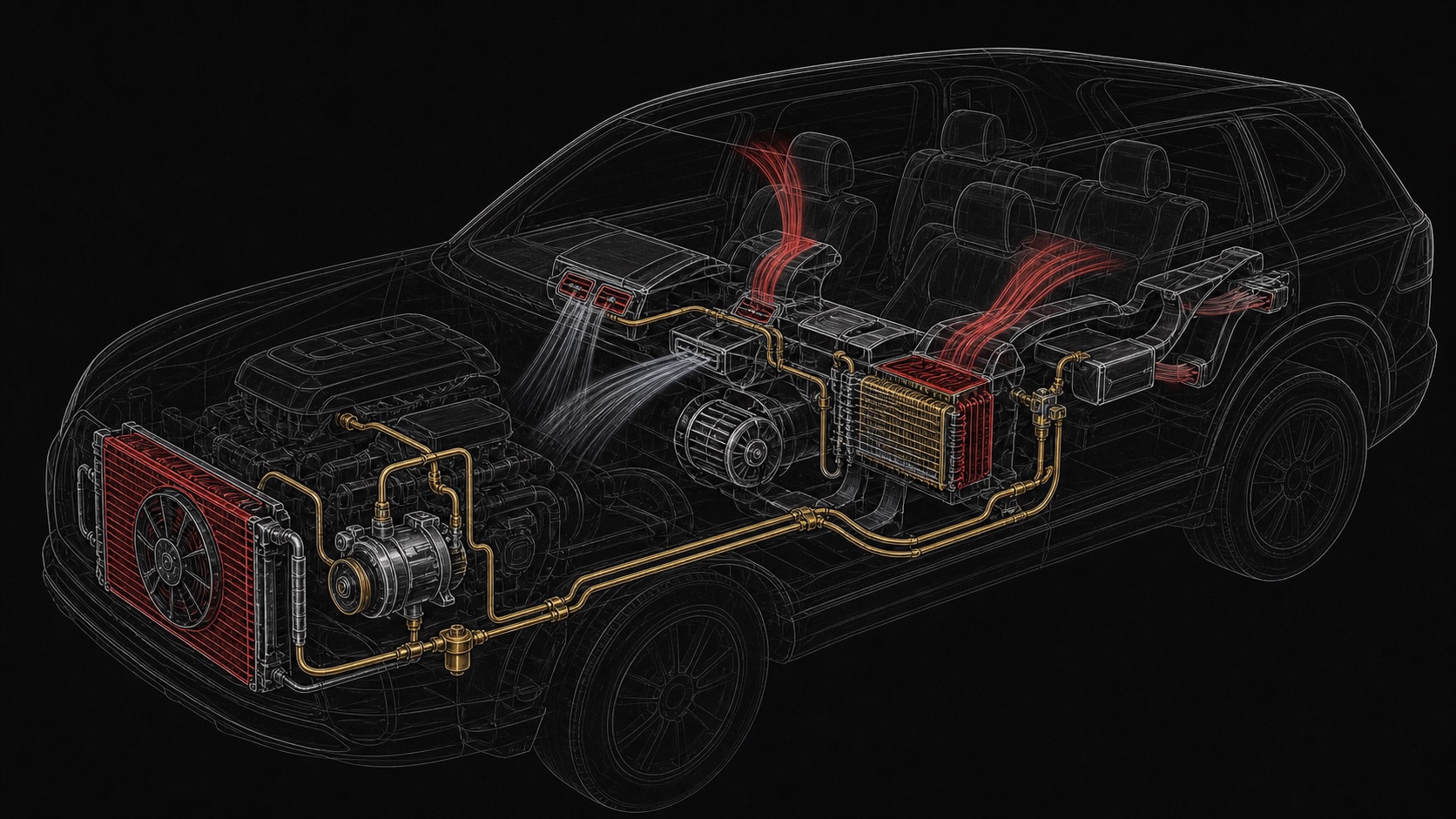
Airflow, heating and cooling meet inside this concealed cabin system.
Compressor, condenser, metering device and evaporator.
Cabin filter, blower motor and ducts move air.
Coolant flow through the heater core supplies warmth.
Actuators and modules select temperature, mode and vent.
Refrigerant cools and dehumidifies, engine coolant supplies heat, and doors plus the blower direct the result into the cabin.
One symptom can have several causes. These signs tell us where to begin—not which part to replace.
Vent temperature, airflow, control operation and engine temperature establish what the system is doing.
The refrigerant side, blower and air doors, plus coolant flow to the heater, are evaluated as needed.
Pressure readings, visual checks and electrical testing help avoid replacing a compressor or recharging without finding the cause.
After approved work, vent temperature, airflow and system operation are rechecked.
The strongest information from our original service guides, reorganized into short visual chapters.
The A/C system circulates refrigerant through a compressor, condenser, metering device and evaporator. Pressure hoses, seals and service fittings must contain that refrigerant, while the blower moves air across the evaporator and into the cabin.
A recharge may restore cooling when the charge is low, but refrigerant does not normally disappear without a leak. Finding the cause protects the compressor and helps prevent a short-lived repair.
The heater uses hot engine coolant flowing through a heater core. A thermostat, low coolant, restricted core, blend-door problem or blower concern can all reduce heat. Cooling-system problems also matter because they can allow the engine to overheat.
The older site highlighted the compressor, evaporator, pressure hoses, refrigerant charge, water pump, lines and heater core. Our page keeps those systems together so drivers can see why one temperature complaint may require several checks.
The air conditioner also helps remove moisture during windshield defrost operation. Weak airflow, an inoperative compressor or an air-door problem can make winter visibility worse even when the cabin has some heat.
Call with the vehicle information and tell us whether the problem affects temperature, airflow or both. Mention any coolant loss, unusual smell or recent HVAC repairs.
Not necessarily. A leak, compressor control, cooling fan, restriction, blend door or electrical problem can cause warm air. Testing should identify why cooling was lost.
Dual-zone systems use separate temperature doors and sensors. A low refrigerant charge or an actuator/control issue can create uneven vent temperatures.
Some heater complaints are connected to low coolant, circulation or cooling-system problems. If the temperature gauge rises, stop driving and have the vehicle checked.
A resistor, control module, switch, wiring or blower-motor issue may be involved. Electrical testing identifies which part of the speed-control circuit failed.





Towing available