Clutch & flywheel
Connect and disconnect engine torque from the gearbox.
Clutch and manual gearbox service · Chicago
Grinding gears, a slipping clutch or difficulty selecting a gear can come from the clutch release system, hydraulics, linkage, mounts, flywheel or the transmission itself. We isolate the source before recommending clutch work or internal manual transmission repair.
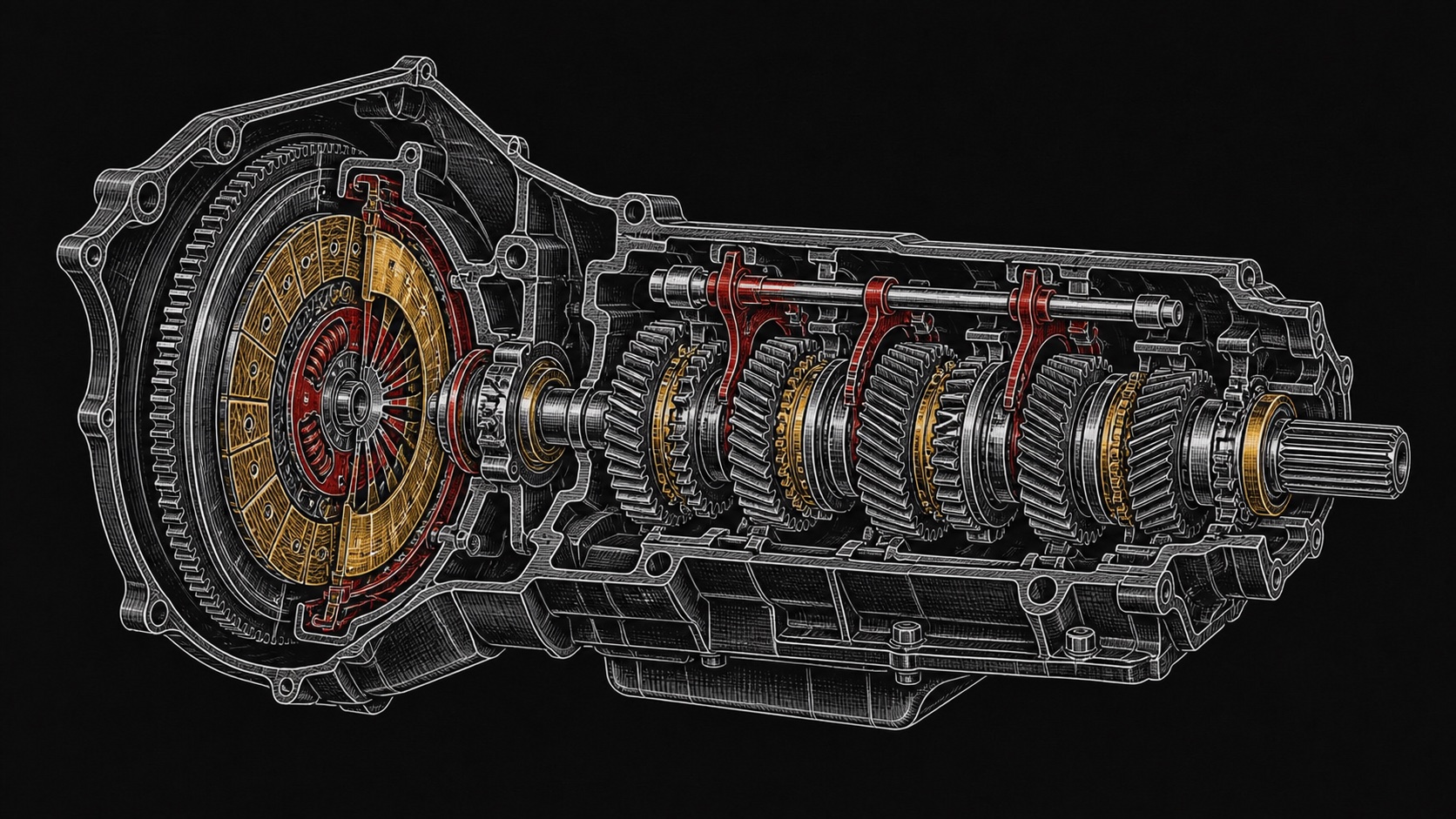
This is where driver input becomes a selected mechanical ratio.
Connect and disconnect engine torque from the gearbox.
Guide selection and match component speeds during a shift.
Create the selected ratio and route power to the final drive.
Lubricate bearings and gears while keeping oil inside the case.
Clutch release and gearbox operation must be evaluated together because either can create hard shifting or grinding.
One symptom can have several causes. These signs tell us where to begin—not which part to replace.
Pedal position, selected gear, temperature and driving load help separate clutch, linkage and gearbox concerns.
Hydraulics, cables or linkage, mounts, fluid and release components are checked before internal work is recommended.
Testing helps identify clutch slip, release problems, bearing noise, synchronizer wear or internal gear damage.
When removal is needed, related wear items are reviewed so the customer can make an informed repair decision.
The strongest information from our original service guides, reorganized into short visual chapters.
A clutch that does not release completely can make the transmission grind even when the gears and synchronizers are serviceable. Worn synchronizers can also cause grinding with a properly operating clutch. Hydraulic leaks, an improperly moving release bearing, linkage problems and damaged mounts may change pedal feel or gear engagement.
We verify the symptom and check the external system before assuming the transmission must be opened. That distinction matters because clutch replacement and internal gearbox repair involve different parts, labor and long-term decisions.
Depending on the vehicle and findings, work may involve clutch hydraulics, cable or linkage adjustment, clutch disc, pressure plate, release bearing, pilot bearing, flywheel service, seals, bearings, synchronizers or internal gears. Transfer cases and other drivetrain components may also need evaluation when their symptoms overlap.
When the transmission or clutch must be removed, it is important to consider accessible wear items and leaks at the same time. We discuss the complete parts plan and applicable written warranty before approved work begins.
Manual transmissions are less common in newer vehicles, but correct diagnosis remains specialized work. Quality Transmission services foreign and domestic manual drivetrains from its West Irving Park Road location.
Call with the vehicle year, make, model and a detailed description of what the pedal and shifter are doing. If the vehicle cannot select a gear safely, ask whether towing is recommended. Se habla español.
Engine speed may rise without a matching increase in road speed, especially under load or in a higher gear. Oil contamination, adjustment and internal transmission problems can produce related symptoms, so inspection is still important.
No. A clutch that is not releasing, hydraulic problem, linkage issue or driving technique can cause grinding. Worn synchronizers or gears are also possible.
The flywheel should be inspected for heat damage, cracks and wear. Whether it is resurfaced or replaced depends on its type, condition and manufacturer guidance.
Yes. Manual gearboxes use specified lubricants, and the interval varies by manufacturer and use. Incorrect fluid can affect shifting and component life.

Towing available