Disassemble
Separate assemblies while preserving clues about the original failure.
Transmission rebuilding · Chicago
Rebuilding keeps the vehicle’s transmission case and restores the unit through complete disassembly, cleaning, measurement and replacement of worn or damaged components. It is precision work: the quality of diagnosis, parts selection, assembly and final testing all influence the result.
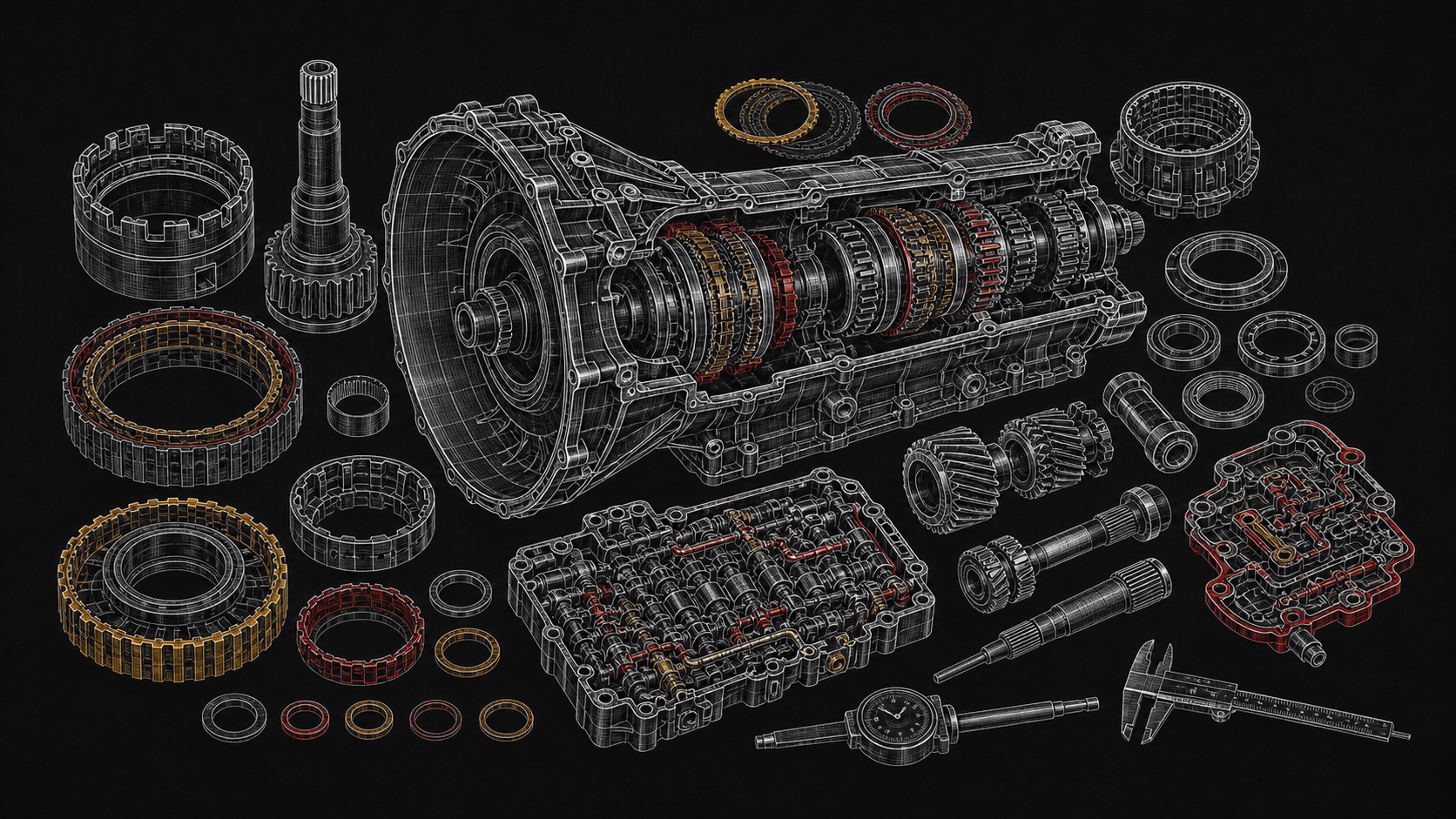
A rebuild exposes, measures and evaluates the complete internal assembly.
Separate assemblies while preserving clues about the original failure.
Expose wear, heat damage, contamination and cracks.
Compare reusable components and clearances with specifications.
Rebuild carefully, install, fill and confirm operation.
Rebuilding is more than replacing one damaged part. The complete unit is disassembled, cleaned, inspected and brought back together around the findings.
One symptom can have several causes. These signs tell us where to begin—not which part to replace.
The transmission is removed and taken apart so hidden internal wear can be inspected directly.
Hard parts, hydraulic components, case areas and wear surfaces are checked against the unit’s needs.
Worn friction materials, seals and affected components are replaced; known causes of failure are addressed where applicable.
The rebuilt unit is assembled carefully, installed with the proper fluid and verified in the vehicle.
The strongest information from our original service guides, reorganized into short visual chapters.
A rebuild is more than replacing the part that failed. The transmission is disassembled so clutch material, seals, bushings, bearings, drums, gearsets, pumps, valve-body components and the torque converter can be evaluated. The exact parts replaced depend on the transmission design and the condition found during teardown.
Cleaning and measurement are essential because contamination, wear and heat damage may not be visible from outside the unit. A proper rebuild also addresses the reason for failure when it can be identified, such as a cooling problem, pressure loss or damaged related component.
Rebuilding may preserve a known original case, allow the unit to be corrected for observed wear and avoid compatibility problems with an unknown used transmission. Replacement may offer a faster or better-supported solution for other units. Neither option is automatically right for every vehicle.
We consider parts availability, unit design, vehicle mileage, hard-part damage, supplier warranty and total installed cost. Once the unit is opened, additional damage may change the parts list, so the estimate and authorization process should be explained clearly.
Quality Transmission & Auto Service has worked with foreign and domestic transmission systems for decades. The shop’s rebuilding and installation team serves drivers from Chicago, Portage Park, Dunning, Old Irving Park, Norridge and surrounding neighborhoods.
Ask which components are included, what findings were discovered during teardown and which written warranty applies to the finished repair. Se habla español, and towing is available when the vehicle cannot be driven.
No. A used transmission is generally installed in the condition it came from another vehicle. A rebuilt transmission is disassembled, inspected and reassembled with affected wear parts and damaged components addressed.
The exact parts list comes from diagnosis and internal teardown. Unit-specific wear patterns, measurements, contamination and hard-part damage determine what must be replaced.
Time depends on removal, teardown findings, parts availability and related repairs. We provide a realistic schedule after the unit and required parts are identified.
Warranty coverage depends on the repair, parts and unit. Ask for the applicable written terms on the estimate before authorizing work.




Towing available