Shocks & struts
Control repeated spring motion after bumps and weight transfer.
Ride, handling & steering inspection · Chicago
Suspension keeps the tires controlled against the road while steering places them where the driver intends. A worn joint, damper, spring, bushing or steering connection can affect comfort, tire wear and stability in a different way. We inspect the system as a whole.
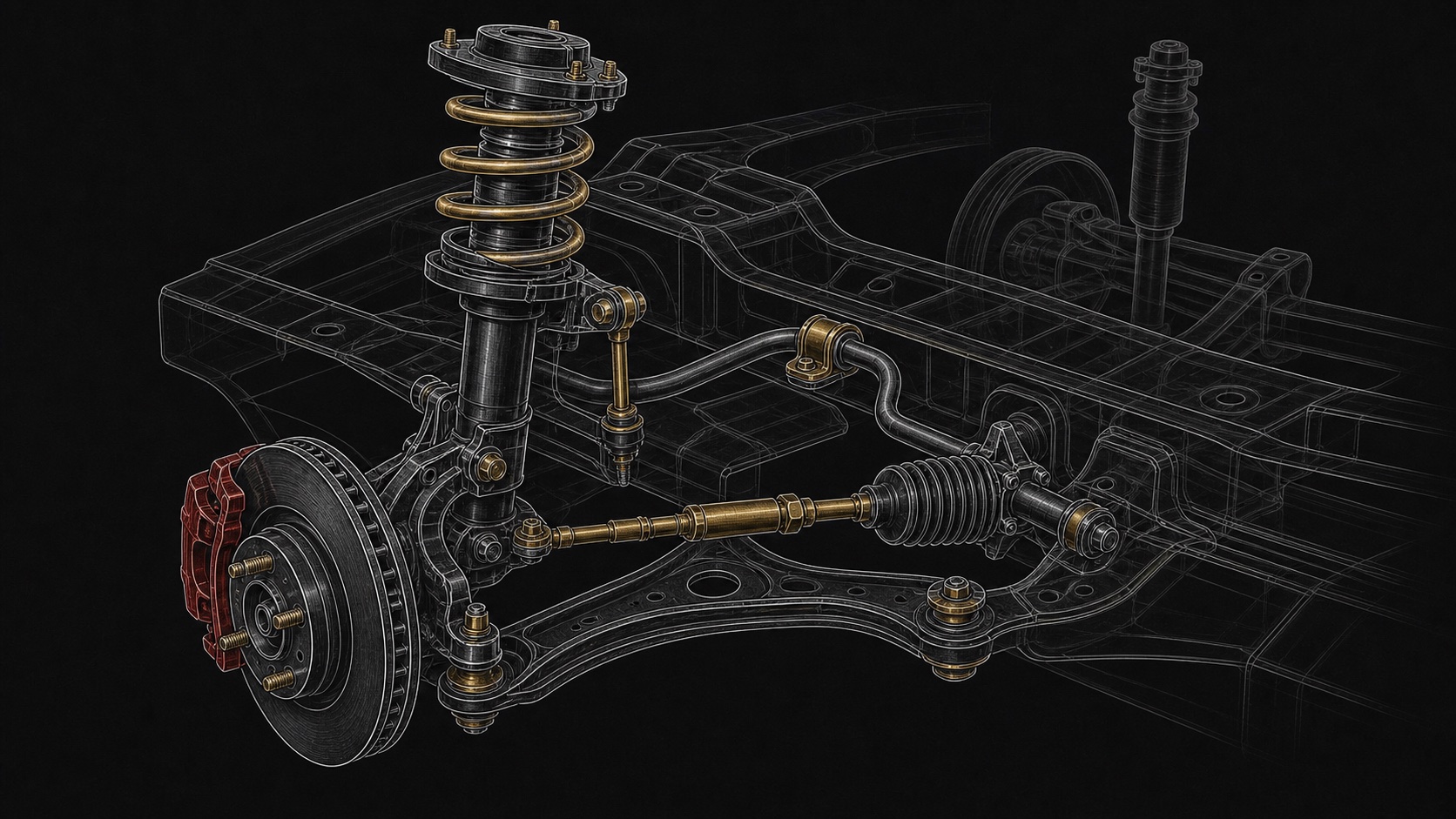
The spring supports weight while the damper controls repeated movement.
Control repeated spring motion after bumps and weight transfer.
Support the vehicle and locate the wheel through its travel.
Allow movement while maintaining steering connection.
Links the sides to reduce body roll during turns.
Springs carry weight, dampers control movement, joints guide the wheel and steering links aim it down the road.
One symptom can have several causes. These signs tell us where to begin—not which part to replace.
Ride, steering response, noise and braking movement help identify which area needs inspection.
Shocks, struts, springs, control arms, joints, bushings, links and tie rods are checked for wear or damage.
Alignment cannot correct a loose joint or failed component, so mechanical condition is addressed first.
After approved work, fasteners, ride height, steering feel and alignment needs are reviewed.
The strongest information from our original service guides, reorganized into short visual chapters.
Springs support vehicle weight and allow wheel movement. Shocks and struts control that motion so the tire settles instead of continuing to bounce. Control arms, ball joints and bushings guide the wheel through its travel, while sway bars reduce body roll.
A noisy component is not always the visibly largest one. Stabilizer links, bushings, mounts and steering connections can create sharp clunks even when the shock or strut is not leaking. Hands-on inspection helps locate the movement.
The old suspension page described shocks, struts, ball joints, sway bars, stabilizer links and tie rods. Those parts remain here, but they are organized by what they do: control vertical motion, support and locate the wheel, resist body roll, and connect steering input to the knuckle.
Suspension lift installation or modified ride height requires extra attention to geometry, travel and related components. Tell us about any non-stock parts when scheduling an inspection.
Potholes and repeated road impacts can damage a component suddenly or reveal wear that developed gradually. If the vehicle changes direction after a bump, a tire rubs, or a wheel appears out of position, have it inspected before driving further.
Describe whether the sound occurs over one-wheel bumps, while turning, braking or accelerating. That detail helps distinguish suspension, steering, mount and driveline noises.
Visible oil and reduced damping can indicate failure, but light residue and unrelated ride concerns should still be evaluated. Replacement decisions should consider condition on both sides of the axle.
It may help if alignment is the cause, but loose parts, weak dampers, tire pressure and wheel damage can also create wear. Mechanical problems should be corrected first.
Stabilizer links, bushings, mounts, ball joints and other connections can move when one wheel rises. Inspection under the right load is often needed to locate it.
Both control suspension motion, but a strut is also a structural part of the suspension assembly. The vehicle design determines which it uses.




Towing available